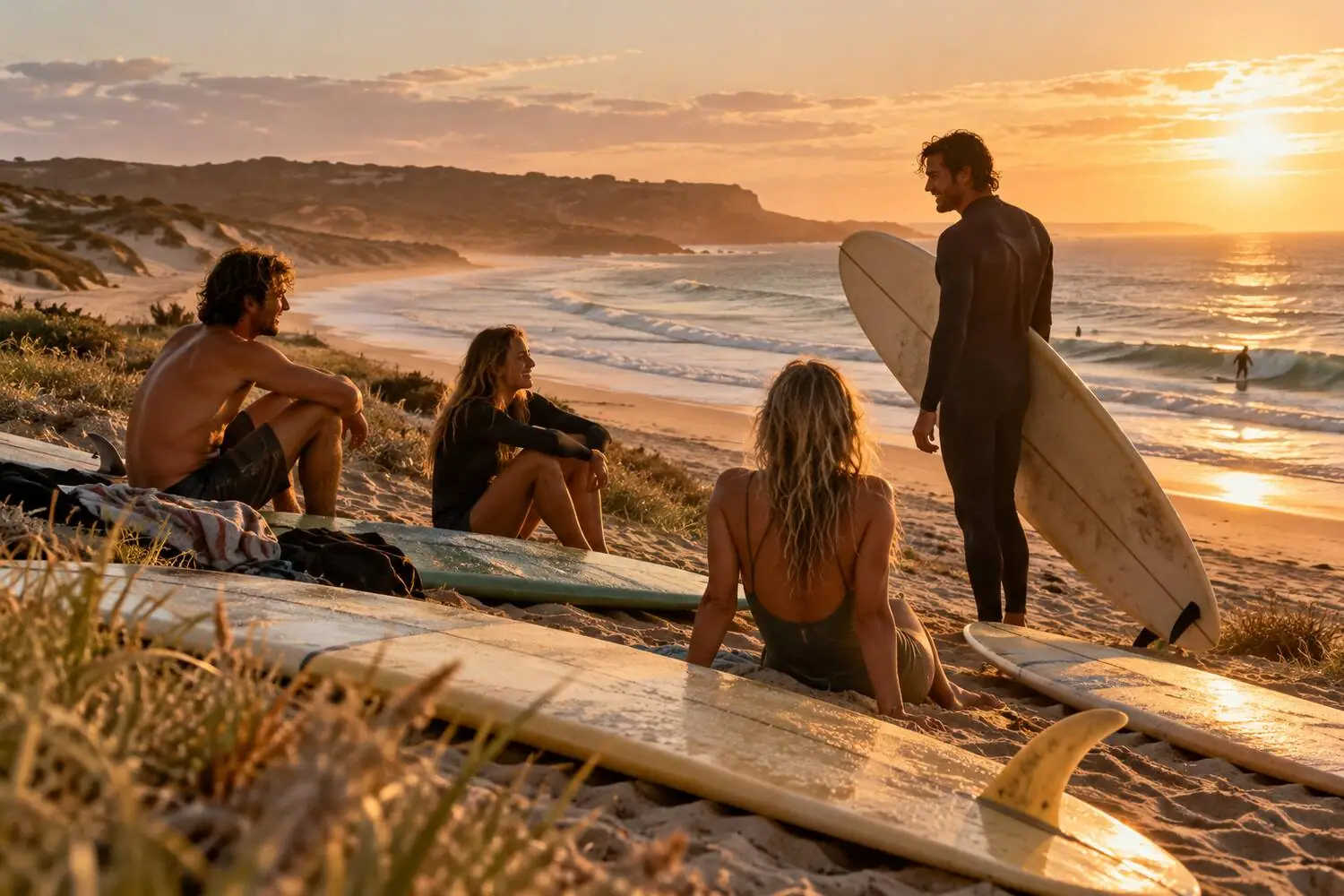
The Duke at Freshwater
Modern board-riding arrived in Australia with Duke Kahanamoku, the Hawaiian Olympic swimming champion, who gave surfing demonstrations around Sydney during his 1914–15 visit. His landmark display at Freshwater Beach, on the Northern Beaches, drew crowds and captured imaginations. The board he shaped from local sugar pine is still preserved at the Freshwater Surf Life Saving Club, where a statue on the headland now looks out over the break he helped make famous.
Lifesaving — the backbone of the beach
Organised surf rescue actually predates the Duke. As ocean bathing boomed in the early 1900s and drownings rose, Australians built something distinctive: a volunteer surf lifesaving movement. The Bondi Surf Bathers' Life Saving Club, formed in 1907, is among the oldest in the world, and early Bondi lifesavers helped pioneer the surf rescue reel. Today Surf Life Saving Australia is one of the largest volunteer movements of its kind anywhere, with hundreds of affiliated clubs patrolling the coast.
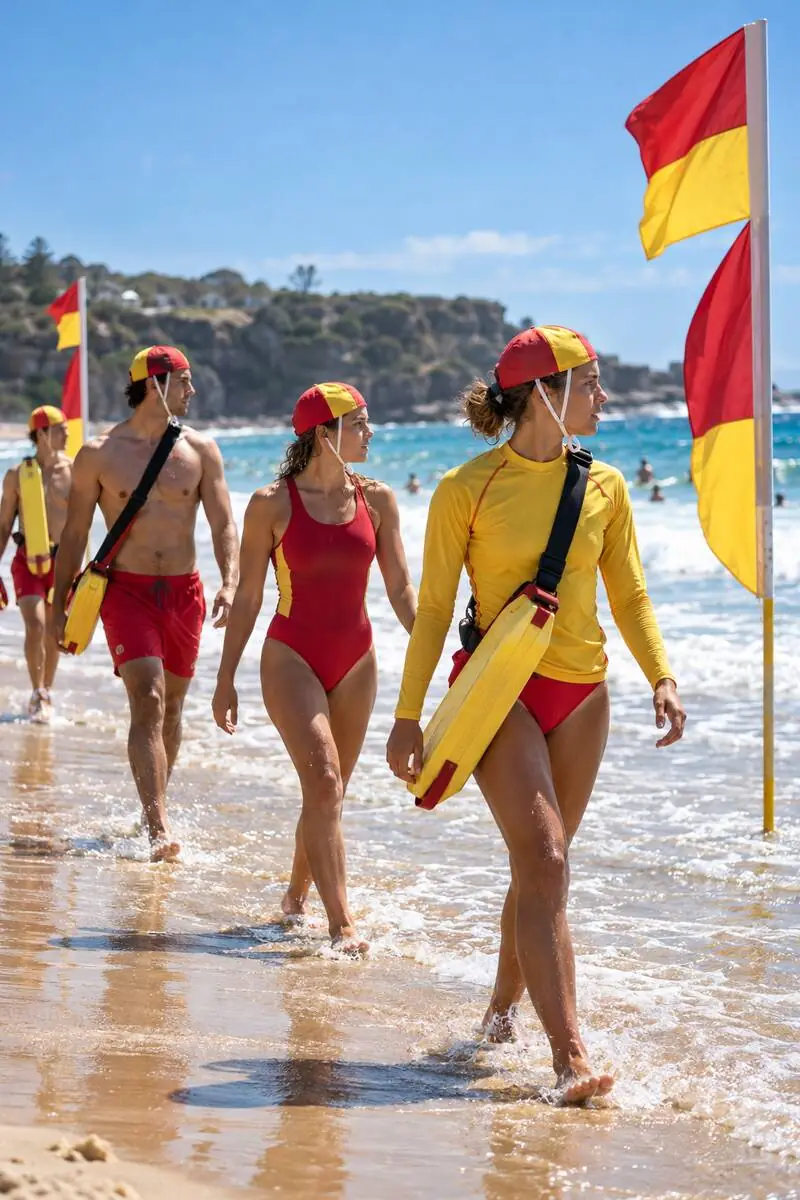
The red and yellow
The surf lifesaving flags — a national icon — were introduced in the 1930s to mark the patrolled, safest place to swim. Red-and-yellow caps followed soon after. More than a safety signal, the colours have come to stand for a whole idea of the Australian beach: volunteering, community and looking out for the person next to you in the water.
Torquay, and a surf industry is born
On Victoria's Surf Coast, the small town of Torquay became an unlikely global capital of surf. Two of the biggest names in surfwear — Rip Curl and Quiksilver — were both founded here, Rip Curl in 1969, shaping boards and wetsuits for the cold power of nearby Bells Beach and exporting the Australian surf look to the world.
Easter at Bells
Just down the road, Bells Beach hosts the Rip Curl Pro — run since 1962 and billed as the longest continuously running event in professional surfing. Every Easter the world's best gather at the Bells Bowl to chase the famous bell trophy on a cold, wrapping right-hander. The site, known as Djarrak, is also significant to the Wadawurrung People, long before the contest arrived.
A living culture
From the junior groms learning to stand up on a Sunday to the dawn patrol at a lonely reef, surfing in Australia is less a sport than a shared way of living with the coast. It threads together travellers and locals, longboarders and chargers, the national titles and the backyard beach break. Wherever you paddle out here, you're joining something more than a hundred years in the making.